
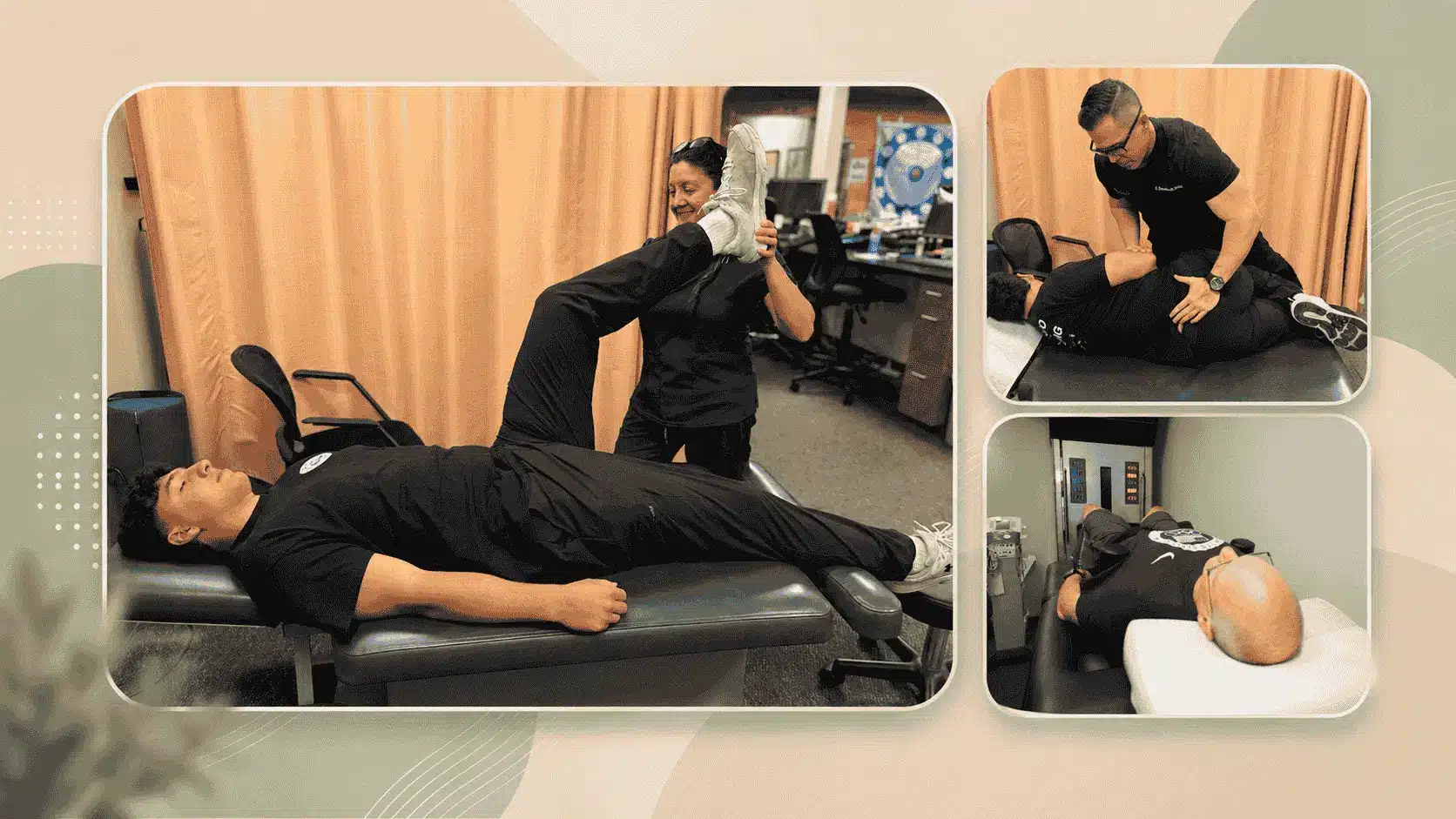
It often starts with a small negotiation with your back.
You lean forward to tie your shoes and move a little more carefully than usual. You stand up after a long drive and need a few seconds before you feel completely upright. Maybe you wake in the morning and instinctively place a hand on your lower back before taking those first few steps.
When lower back pain sticks around, we become remarkably good at adapting to it. We sit differently. We avoid certain movements. We quietly stop doing things that might make it hurt.
But avoiding movement altogether isn’t usually the answer.
For many people, gentle movement and stretching can be useful parts of managing uncomplicated lower back discomfort. The right stretches may ease muscle tension, maintain flexibility, and make everyday movement feel less intimidating.
At Total Health Physical Medicine & Rehabilitation Center, we also know that a stretch is only helpful when it makes sense for the person doing it. Back pain has many possible causes, so these seven gentle lower back stretches for pain relief should be viewed as a starting point…not a replacement for understanding why your back hurts.
Why Does Your Lower Back Feel So Tight?
Your lower back does a tremendous amount of work without receiving much appreciation for it.
It supports your upper body while you walk, bend, sit, lift, and turn. Meanwhile, the muscles around your hips, abdomen, pelvis, and legs all influence how much work the lower back has to perform.
Now imagine spending eight hours sitting at a desk. Your hips remain flexed, some muscles become stiff, and others do relatively little work. Then you stand up and expect everything to move normally again.
That familiar stiffness isn’t necessarily coming from one isolated muscle. Your hips, hamstrings, glutes, and spine can all contribute to how your lower back feels.
That’s why useful stretches for back pain relief often involve more than simply bending or twisting the back itself.
If recurring discomfort is affecting your daily activities, you can learn more about back pain treatment in New Jersey and the treatment options available at Total Health.
Note: Please do no more than seven repetitions of each exercise below. If you are already experiencing severe pain, stop and consult your doctor before attempting them.
1. Knee-to-Chest Stretch: Start Gently
Let’s begin with something simple.
Lie comfortably on your back with your knees bent. Slowly bring one knee toward your chest while keeping the opposite foot relaxed on the floor. Hold the position gently, then return your leg and repeat on the opposite side.
There should be no competition to see how close you can pull your knee. The goal is a comfortable stretch through the lower back and hip.
This movement can feel particularly welcome after prolonged sitting because it gently encourages movement through areas that may have been relatively still for hours.
2. Cat-Cow: Give Your Spine Permission to Move
If you’ve ever watched a cat wake from a nap, you’ve seen how naturally animals stretch before moving.
We could learn something from them.
Begin on your hands and knees. Slowly round your back upward while allowing your head to relax. Then gently reverse the movement, allowing your abdomen to lower as your chest lifts slightly.
Move slowly between the two positions rather than forcing either one.
Cat-cow encourages gentle movement throughout the spine and can be especially useful when the back feels stiff after waking or sitting for extended periods.
3. Child’s Pose: A Moment for Your Back to Relax
Sometimes the most useful stretch is the one that simply allows everything to settle.
Starting on your hands and knees, slowly move your hips toward your heels while reaching your arms forward. Stop wherever the position feels comfortable.
You may notice a gentle stretch through the lower back, hips, and sides of the torso.
For some people seeking natural lower back pain relief, child’s pose becomes a favourite because it combines stretching with a moment of relaxation. However, people with certain knee or hip problems may find this position uncomfortable and should avoid forcing it.
4. Seated Hamstring Stretch: Look Below the Back
Here’s something people don’t always expect: helping your back may mean paying attention to your legs.
Tight hamstrings can influence movement around the pelvis and lower back. A gentle hamstring stretch may therefore be useful within a broader mobility routine.
Sit near the edge of a sturdy chair and extend one leg forward with the heel resting on the floor. Keeping your back comfortably straight, hinge slightly forward from your hips until you notice a gentle stretch behind the thigh.
You don’t need to reach for your toes. More movement isn’t automatically better movement.
5. Figure-Four Stretch: Give Your Hips Some Attention
The hips and lower back are close neighbours, and when one isn’t moving comfortably, the other can sometimes compensate.
Lie on your back with both knees bent. Rest one ankle across the opposite thigh, creating a figure-four shape. If comfortable, gently bring the supporting leg toward you until you feel a stretch around the hip and buttock.
This can be useful for people who spend much of their day sitting and notice tightness around the hips alongside lower back discomfort.
6. Pelvic Tilts: Small Movement, Important Muscles
This stretch is so subtle that it may initially feel as though you’re hardly doing anything.
Lie on your back with your knees bent and feet resting on the floor. Gently tighten your abdominal muscles and tilt your pelvis so that your lower back moves slightly toward the surface beneath you. Relax and repeat slowly.
Pelvic tilts help you become more aware of how your abdominal muscles, pelvis, and lower spine work together.
That awareness matters. Long-term back rehabilitation isn’t simply about becoming more flexible; it is also about developing better control over movement.
For people who need a more structured recovery plan, Rehabilitation Therapy may be incorporated to improve strength, mobility and function.
7. Gentle Lower-Trunk Rotation: Finish with Easy Movement
Lie on your back with your knees bent and feet together. Keeping your shoulders relaxed, allow both knees to move gently toward one side. Return to the middle before moving toward the other.
Keep the range comfortable and controlled.
This movement introduces gentle rotation through the lower back and hips. It can be a relaxing way to finish your stretching routine, particularly after a day spent sitting in relatively fixed positions.
When Stretching Isn’t Enough
There is an important distinction between having a tight back and having a condition that requires professional treatment.
Stretching may help some forms of muscular stiffness and uncomplicated mechanical back discomfort, but it won’t address every cause of lower back pain.
Pain that travels into the buttock or leg, for example, may involve nerve irritation. People seeking lower back pain and sciatica relief may require a different approach than someone experiencing simple muscle tightness. Similarly, pain relief for a trapped nerve in the lower back should begin with an appropriate evaluation rather than increasingly aggressive stretching.
Persistent symptoms can also be associated with disc problems, arthritis, joint dysfunction, injuries, or other conditions.
At Total Health Physical Medicine & Rehabilitation Center, the focus is therefore on understanding the source of the problem before recommending a treatment plan.
Depending on the cause of your symptoms, chiropractic care may also form part of a personalised treatment approach.
Where Spinal Decompression May Fit into Back Pain Care
For some patients, stretching and rehabilitation are only part of the picture.
When certain spinal or disc-related conditions are contributing to symptoms, non-surgical spinal decompression may be considered. The therapy uses controlled traction to gently change forces through the spine and may be incorporated into a broader rehabilitation program when clinically appropriate.
It isn’t something every person with back pain needs, which is precisely why an individual assessment matters.
You can learn more about Spinal Decompression Therapy to understand how the treatment works and when it may be considered.
Why Choose Total Health Physical Medicine & Rehabilitation Center?
You don’t arrive at an appointment as “a bad back.” You arrive as someone who may want to sit comfortably through a workday again, return to the gym, play with your children, sleep without constantly changing positions, or simply put on your shoes without thinking twice.
That difference matters.
At Total Health Physical Medicine & Rehabilitation Center, we look at how back pain is affecting your actual life before developing a care plan. Depending on the cause, Lower back pain treatment in New Jersey may involve rehabilitation, chiropractic care, spinal decompression, other non-surgical therapies, or a combination of approaches.
Rather than asking patients to fit into a standard program, the goal is to build treatment around their symptoms, movement, lifestyle, and the activities they want to return to.
The Best Stretch Is the One Your Back Actually Needs
There is something reassuring about knowing that caring for your back doesn’t always require complicated equipment or an hour-long routine.
Sometimes it starts with five minutes on the living room floor.
But listen to what your body tells you. A stretch should generally feel gentle, not sharp, electric, or increasingly painful. If movement causes pain to travel down your leg, produces numbness or weakness, or consistently makes your symptoms worse, stop and seek professional guidance.
At Total Health Physical Medicine & Rehabilitation Center, we want patients to understand their backs rather than become afraid of moving them. The right combination of education, appropriate movement, rehabilitation, and treatment can help make everyday activities feel possible again.
And sometimes, progress really does begin with one careful stretch.
If persistent lower back pain is affecting your daily activities, you can contact Total Health Physical Medicine & Rehabilitation Center to discuss your symptoms and appropriate next steps.
Frequently Asked Questions
How often should I do stretches for lower back pain relief?
Frequency depends on the cause of your symptoms and your individual health. Gentle stretching may be appropriate regularly for some people, but a healthcare professional or rehabilitation provider can recommend the safest frequency for your condition.
Should I stretch my lower back if I have sciatica?
Some stretches may be helpful, while others can aggravate an irritated nerve. If pain travels down your leg or is accompanied by tingling or numbness, an evaluation can help determine which movements are appropriate.
Can stretching provide natural lower back pain relief?
Stretching may reduce stiffness and improve mobility for some types of mechanical or muscle-related back pain. Persistent pain, however, may require treatment of the underlying condition in addition to stretching.
Does Total Health Physical Medicine & Rehabilitation Center treat chronic lower back pain?
Yes. Total Health Physical Medicine & Rehabilitation Center evaluates the underlying factors contributing to back pain and offers personalized, non-surgical treatment and rehabilitation options based on each patient’s needs.
When should lower back pain be professionally evaluated?
Consider an evaluation when pain persists, repeatedly returns, interferes with everyday activities, or is accompanied by symptoms such as pain traveling into the leg, numbness, tingling, or weakness. Sudden severe symptoms or changes in bladder or bowel control require urgent medical attention.
Disclaimer
This article is for educational purposes only and is not a substitute for medical advice, diagnosis, or individualized treatment. Not every stretch is appropriate for every back condition. Speak with a qualified healthcare professional before beginning a new exercise or stretching program, particularly if you have an injury, chronic condition, nerve symptoms, or significant pain.