
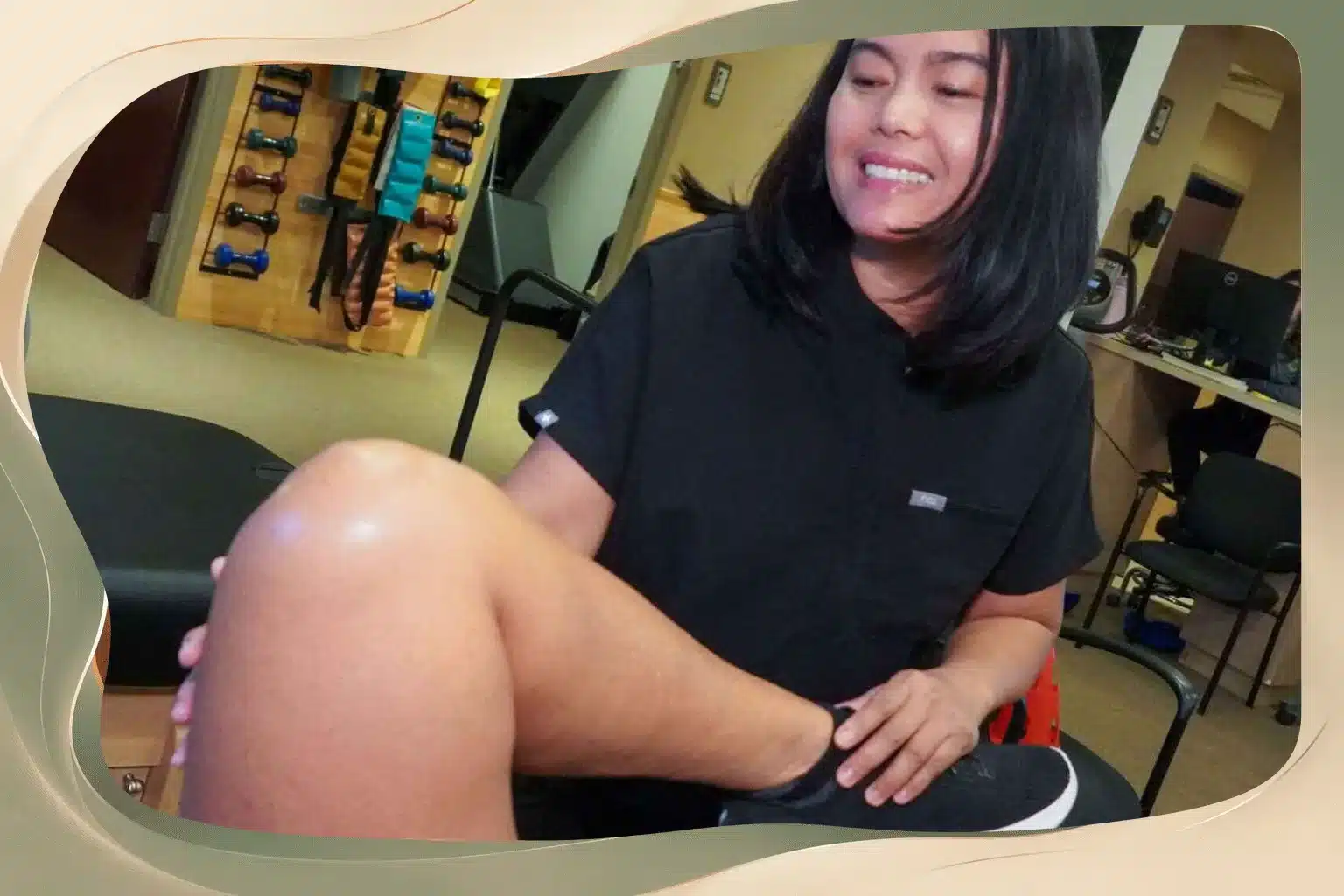
Knee pain has a way of changing the little moments in life.
It might start with a slight ache as you climb the stairs or a stiffness that appears after sitting for too long. Over time, those small inconveniences can turn into bigger challenges. Walking the dog becomes less enjoyable, playing with your grandchildren feels more difficult, or your morning run is replaced with hesitation because you are unsure how your knee will respond.
When this happens, many people naturally focus on the knee itself. But what if the problem isn’t only in the joint?
The body is designed to move as one connected system. The way your feet strike the ground, how your hips move, and even the health of your lower back can all influence the amount of stress placed on your knees. This is one reason why many people ask, “Can a chiropractor help with knee pain?”
At Total Health Physical Medicine & Rehabilitation Center, we take a comprehensive approach to knee pain. Rather than simply focusing on where the discomfort is felt, we look at how your entire body moves to understand what may be contributing to your symptoms and recommend the treatments that best support your recovery.
Understanding Why Knee Pain Happens
Your knees are among the hardest-working joints in your body.
Every step, squat, climb, and jump places force through them. In fact, research has shown that walking can place forces of up to one and a half times your body weight through the knee, while climbing stairs or running increases that load even further.
Because they absorb so much stress, knees can become painful for many different reasons.
Sometimes the cause is an injury. Sometimes it develops gradually through wear and tear, muscle weakness, or changes in the way we move. Conditions such as arthritis, tendon irritation, ligament injuries, and cartilage problems are all common contributors.
However, knee pain isn’t always caused by a problem inside the knee itself.
Movement patterns throughout the rest of the body can also influence how much pressure the knee experiences with every step.
Can a Chiropractor Help with Knee Pain?
The short answer is yes….depending on the underlying cause.
Chiropractic care is not about treating a single joint in isolation. Instead, it focuses on improving how the musculoskeletal system functions as a whole.
If restricted movement in the hips, pelvis, ankles, or lower back is changing the way you walk, additional stress may be transferred to the knees. Over time, this can contribute to discomfort and reduced mobility.
A chiropractor evaluates how your body moves rather than simply where it hurts.
This whole-body assessment helps identify whether joint stiffness, muscle imbalance, poor biomechanics, or spinal dysfunction may be influencing your knee pain.
Could Your Back Be Contributing to Your Knee Pain?
Many patients are surprised to learn that the source of knee pain may not actually be the knee.
The nerves that travel from the lower back supply sensation and muscle control throughout the legs. When these nerves become irritated, pain can sometimes travel further down the leg.
This is why people often ask, does sciatica cause knee pain?
The answer is that it can.
Sciatica and knee pain sometimes occur together because irritation of the sciatic nerve may create discomfort that radiates into the thigh, knee, calf, or foot. In other cases, altered walking patterns caused by lower back pain may place extra strain on the knee joint itself.
If you’re experiencing lower back pain and knee pain together, it is important to evaluate both areas rather than treating only the symptoms in your knee.
Looking Beyond One Treatment
One of the biggest misconceptions about knee pain is that there is a single solution for everyone.
In reality, the most effective treatment depends on what is causing the discomfort.
At Total Health Physical Medicine & Rehabilitation Center, treatment plans are personalised because every patient’s symptoms, goals, and lifestyle are different.
For some patients, chiropractic care helps restore healthy movement throughout the spine and lower body. Others may benefit from rehabilitation exercises that improve strength and stability.
When clinically appropriate, additional non-surgical treatments may also be recommended.
For example, patients with joint degeneration may benefit from knee decompression therapy, which is designed to reduce pressure within the joint and improve comfort during movement.
Others may be candidates for Injection Therapy, which can help manage inflammation and improve function in certain knee conditions.
For tendon-related conditions or chronic soft tissue injuries around the knee, Shockwave Therapy may also be recommended to stimulate healing and improve recovery.
By combining treatments when appropriate, we are often able to create a more comprehensive plan that supports long-term recovery rather than temporary symptom management.
When Should You Seek Professional Care?
Many episodes of mild knee discomfort improve with time and activity modification.
However, if your pain has persisted for several weeks, keeps returning, limits your mobility, or prevents you from enjoying everyday activities, it may be time for a professional assessment.
Persistent pain is your body’s way of telling you that something deserves attention.
Seeking care early may help identify movement problems before they become more significant and can often reduce the likelihood of long-term limitations.
Whether you’re trying to understand how to cure knee pain, manage nerve pain in the knee, or determine whether your symptoms may be related to your back, an accurate diagnosis is always the first step.
Why Personalised Care Makes a Difference
No two patients experience knee pain in exactly the same way.
One person may struggle with climbing stairs, while another notices discomfort only during exercise. Someone recovering from an old sports injury has different needs than someone managing arthritis or general knee pain.
This is why treatment should never follow a standard template.
Understanding your daily activities, medical history, movement patterns, and long-term goals allows your healthcare team to recommend treatments that are appropriate for your specific situation rather than simply addressing the symptoms.
A personalised approach also gives patients a clearer understanding of why certain therapies are being recommended and how they work together to support recovery.
Why Choose Total Health Physical Medicine & Rehabilitation Center?
Knee pain can affect much more than your ability to walk. It can influence your confidence, independence, and the activities that bring you joy.
At Total Health Physical Medicine & Rehabilitation Center, we believe successful treatment starts with understanding the person behind the symptoms. We take the time to evaluate how your body moves, identify the factors contributing to your discomfort, and develop a treatment plan that reflects your goals and lifestyle.
Our multidisciplinary approach allows us to combine chiropractic care with advanced non-surgical therapies, rehabilitation, and innovative technologies when appropriate. Rather than relying on a single treatment, we focus on helping patients improve movement, reduce discomfort, and return to the activities that matter most.
Better Movement Starts with Understanding the Cause
When your knee hurts, it is easy to assume the joint itself is the problem.
Sometimes it is.
Other times, the answer lies elsewhere—in the way your body moves, how your muscles work together, or how your spine and nervous system influence the mechanics of every step you take.
Understanding these connections is what allows treatment to become more precise and more effective.
At Total Health Physical Medicine & Rehabilitation Center, our goal is to help patients move with greater confidence through personalised, evidence-based care. Whether your knee pain is related to arthritis, overuse, sciatica, or another musculoskeletal condition, finding the underlying cause is often the first step toward lasting improvement. Contact us today!
Frequently Asked Questions
Can a chiropractor help with knee pain?
Yes. Chiropractic care may help certain types of knee pain by improving joint mobility, correcting movement patterns, and addressing issues in the spine, hips, or ankles that may be contributing to excessive stress on the knee.
Can sciatica cause knee pain?
Yes. Sciatica can sometimes cause pain that radiates into the knee because the sciatic nerve travels from the lower back through the legs. A professional assessment can help determine whether your symptoms are nerve-related or originate within the knee itself.
What treatments are available for knee pain at Total Health Physical Medicine & Rehabilitation Center?
Depending on the cause of your symptoms, treatment may include chiropractic care, rehabilitation, knee decompression therapy, injection therapy, shockwave therapy, and other non-surgical approaches tailored to your needs.
How do I know if my knee pain is coming from my back?
If your knee pain is accompanied by lower back pain, tingling, numbness, or pain travelling down the leg, your symptoms may be related to nerve irritation rather than the knee joint alone. A comprehensive evaluation can help identify the source.
When should I seek treatment for knee pain?
If your knee pain lasts longer than a few weeks, keeps returning, limits your daily activities, or becomes more severe, it is advisable to seek a professional assessment to determine the underlying cause and appropriate treatment.
Disclaimer
This article is for educational purposes only and should not be considered medical advice. Knee pain can have many different causes, and treatment recommendations should always be based on an individual assessment by a qualified healthcare professional. If you experience sudden swelling, severe pain, inability to bear weight, or significant injury to the knee, seek prompt medical attention.


