

When you’re recovering from an injury, there is usually one question you want answered before anything else: When will I feel like myself again?
Perhaps you’re missing your morning runs, struggling with back pain at work, or finding that even a short walk feels harder than it should. Whatever brought you to physical therapy, knowing what recovery might look like can make the journey feel a little less uncertain.
At Total Health Physical Medicine & Rehabilitation Center, rehabilitation is about more than helping discomfort settle. It is about rebuilding strength, restoring movement, and helping you return to the things you enjoy.
First, How Long Does Physical Therapy Take?
The answer depends on what you’re recovering from. A mild muscle strain may improve within a few weeks, while recovery from surgery, a significant ligament injury, or a longstanding condition can take several months.
For many musculoskeletal problems, a course of physical therapy for injuries may last approximately four to twelve weeks. However, this is a general illustration rather than a guaranteed timeline.
Your age, overall health, injury severity, activity level, and consistency with rehabilitation can all influence progress.
Someone hoping to walk comfortably around the neighbourhood may also have different rehabilitation goals from an athlete preparing to return to competitive sport.
That is why recovery should be measured by what your body can comfortably and safely do, not simply by how many appointments you have completed.
Your Physical Therapy Recovery Timeline: What Happens Along the Way?
Recovery rarely follows a perfectly straight line. Some weeks bring noticeable improvements, while others involve smaller changes that are just as important.
Here is what a typical rehabilitation journey might involve.
Weeks 1–2: Understanding the Problem and Finding Your Starting Point
The beginning of physical therapy is about getting to know your body and understanding what needs attention.
Your therapist may assess your movement, strength, balance, flexibility, symptoms, and everyday limitations. Treatment often begins with manageable exercises, education, and strategies to help you remain appropriately active.
For someone recovering from back pain, the early goal might be sitting more comfortably or learning how to move without repeatedly aggravating symptoms.
For an athlete, it may mean restoring basic movement before introducing more demanding exercises.
The aim is not to rush progress, but to establish a foundation that recovery can build upon.
Weeks 3–4: When Movement Begins to Feel More Familiar
By this stage, some patients begin noticing that activities which once felt difficult are becoming easier.
Perhaps you can walk a little further, bend with less hesitation, or complete exercises that felt challenging during your first appointment.
Treatment may gradually introduce more strengthening, mobility work, and functional movements.
However, not everyone follows this schedule. Some injuries require longer protection or a slower progression, particularly after surgery.
The important thing is that your rehabilitation programme evolves according to how you respond.
Weeks 5–8: Rebuilding Strength and Confidence
This is often where rehabilitation becomes more focused on returning to everyday activities.
Exercises may become progressively more challenging, helping improve strength, stability, endurance, and movement control.
If you’re recovering from a knee injury, you might begin working towards climbing stairs comfortably or tolerating longer walks.
For someone receiving physical therapy for athletes, this stage may include more demanding balance, strength, or sport-related movements when appropriate.
Progress is not simply about being able to perform an exercise. It is about developing the confidence and physical capacity to use that movement outside the clinic.
Weeks 9–12 and Beyond: Returning to the Activities You Love
For some patients, this stage involves preparing to return to normal exercise, work, or recreational activities.
Others may already have completed rehabilitation, while people recovering from more complex injuries may still be building foundational strength.
Athletic physical therapy can involve additional stages of running, jumping, changing direction, and gradually returning to sport-specific demands.
The goal is to make sure your body is prepared for what you want to ask of it, rather than simply returning because a certain number of weeks has passed.
How Often Is Physical Therapy Recommended?
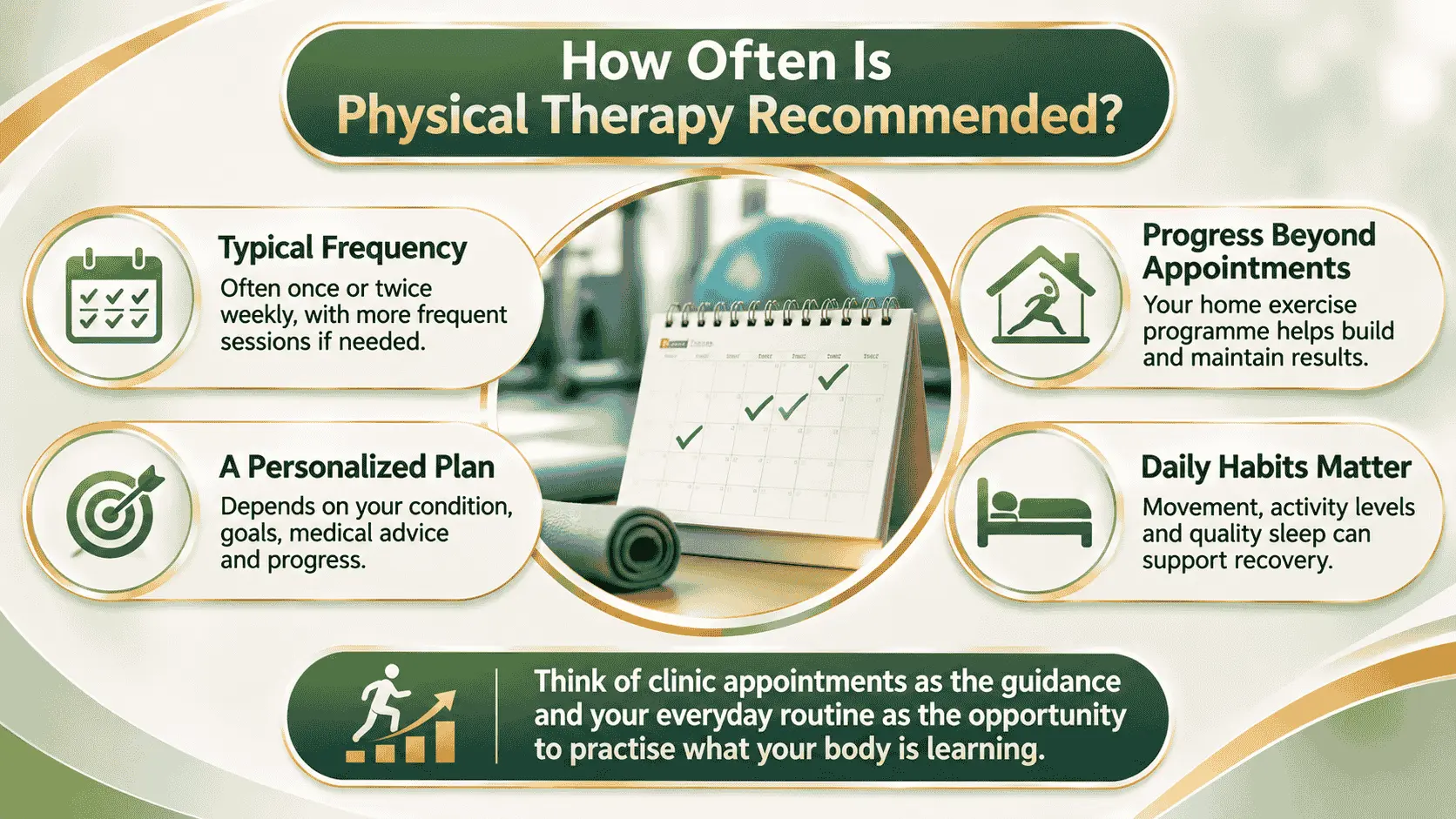
Another common question is how often is physical therapy needed during recovery?
Some patients attend once or twice weekly, while others may need more frequent sessions during particular stages of rehabilitation. Appointment frequency depends on the condition, treatment goals, medical recommendations, and progress.
Importantly, recovery does not happen only during appointments.
Your home exercise programme, daily movement habits, sleep, and gradual return to activity can all influence how rehabilitation progresses.
What Are the Benefits of Physical Therapy Beyond Pain Relief?
Pain relief is often what brings someone through the door, but it is rarely the only thing they hope to achieve.
The benefits of physical therapy can include improved strength, mobility, balance, coordination, and confidence during movement.
For someone with recurring back pain, rehabilitation may help them become more comfortable with lifting, bending, or prolonged activity.
For an athlete, the focus may involve rebuilding the physical abilities needed for their sport.
And for someone recovering from surgery, therapy may help restore independence with everyday activities.
You can read more about our Rehabilitation Therapy services here to learn how Total Health Physical Medicine & Rehabilitation Center approaches recovery through personalised rehabilitation and movement-focused care.
Why Does Physical Therapy Take Longer for Some People?
It can be frustrating when someone else seems to recover more quickly, especially if you both started rehabilitation around the same time.
But two people with similar symptoms may have very different injuries, medical histories, physical demands, and recovery needs.
A mild muscle injury is not the same as recovering from ligament reconstruction. Likewise, someone returning to desk work may reach their functional goals sooner than an athlete preparing for competitive activity.
Specialized physical therapy considers these differences when planning treatment.
Progress may also slow temporarily when exercise demands increase. This does not always mean something has gone wrong, but persistent worsening symptoms should be discussed with your provider.
Physical Therapy for Athletes: Is Recovery Different?
Athletes often have an additional challenge. Feeling comfortable during everyday activities is not necessarily the same as being ready to run, jump, lift, or compete.
Physical therapists for athletes may use progressive strengthening, balance exercises, movement assessments, and sport-specific rehabilitation to help prepare the body for those demands.
When addressing a sports injury and physical therapy, the goal is not simply to return to training as quickly as possible. It is to rebuild the strength, control, and capacity needed for a safer return.
That process may continue after everyday pain has improved.
Physical Therapy in New Jersey: Recovery That Fits Your Life
Recovery is personal because the activities you want to return to are personal.
For one person, success means getting through a workday without back pain constantly interrupting their concentration. For another, it means walking the dog again, playing with their children, returning to the gym, or enjoying a weekend hike.
At Total Health Physical Medicine & Rehabilitation Center, rehabilitation focuses on understanding those goals and helping patients work towards them through appropriate, progressive care.
For people seeking physical therapy in New Jersey, the team can assess movement limitations, develop an individualised rehabilitation plan, and adjust treatment as strength, mobility, and confidence improve.
Rather than measuring success only by how quickly discomfort disappears, the focus is on meaningful progress that carries into everyday life.
If an injury, surgery, or persistent pain has kept you from doing the things you enjoy, you can book an appointment with Total Health Physical Medicine & Rehabilitation Center to discuss your recovery goals and explore appropriate rehabilitation options.
FAQs
How long does physical therapy usually take?
Many musculoskeletal rehabilitation programmes last approximately four to twelve weeks, but some conditions improve sooner while others require several months. Your recovery timeline depends on your diagnosis, goals, and response to treatment.
How often should you attend physical therapy?
Some patients attend once or twice a week, while others require a different schedule. Your therapist will recommend a frequency based on your condition and progress.
Can physical therapy help chronic back pain?
Yes. Exercise-based physical therapy is commonly recommended for many forms of chronic lower back pain. Treatment may focus on strength, mobility, movement confidence, and improving everyday function.
Is physical therapy different for athletes?
Athletic rehabilitation often includes sport-specific exercises and progressive physical demands. Returning to competitive sport may require additional strength, endurance, balance, and movement testing.
Where can I find physical rehabilitation in New Jersey?
Total Health Physical Medicine & Rehabilitation Center provides rehabilitation services at its Berkeley Heights and Florham Park locations. Treatment plans are tailored to the patient’s condition, recovery needs, and functional goals.
Disclaimer
This article is intended for educational purposes only and does not replace professional medical advice, diagnosis, or treatment.


