
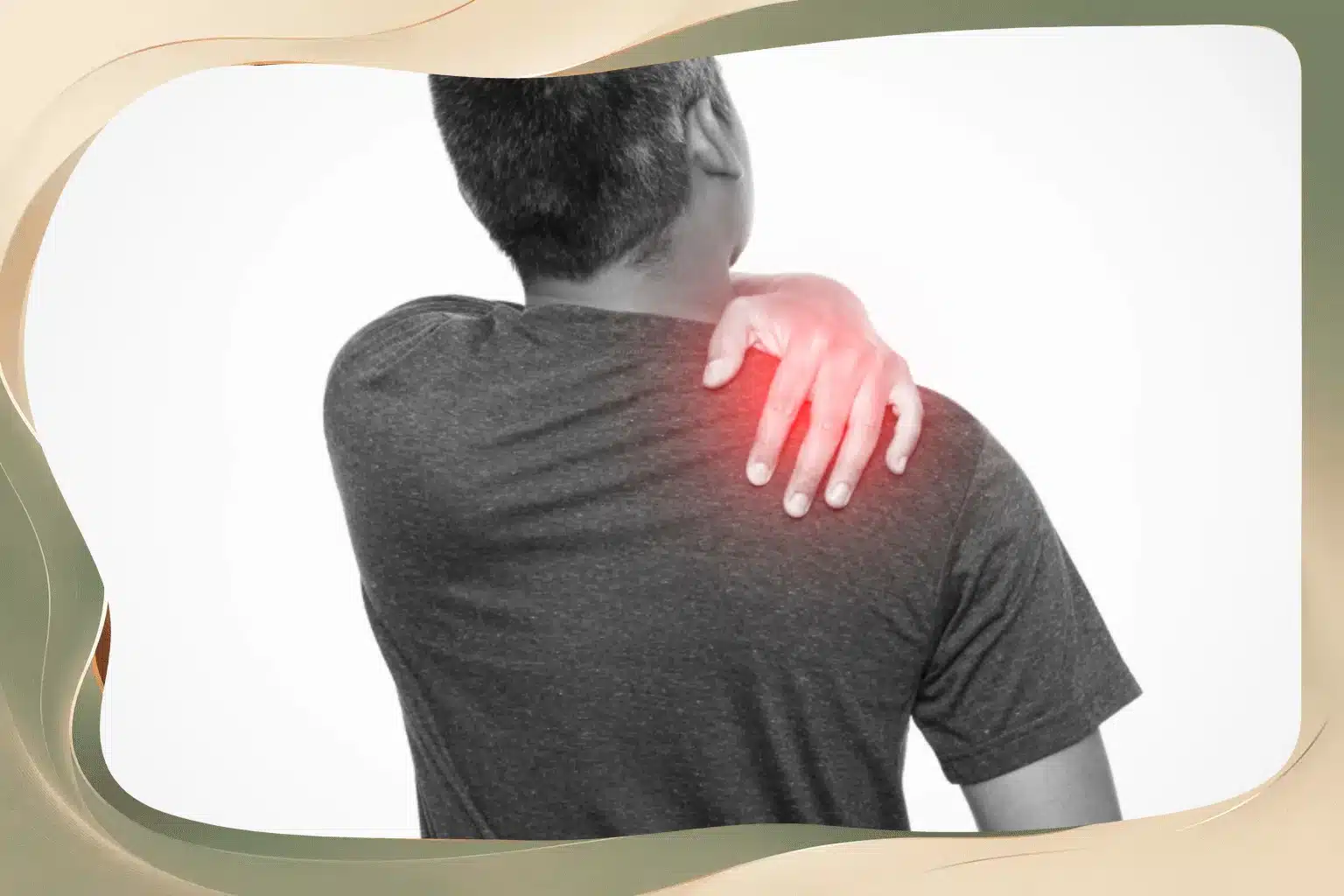
Pain between your shoulder blades can be surprisingly distracting. It may begin as a dull ache halfway through the workday, a tight spot you keep trying to stretch, or a sharp sensation that appears whenever you turn, reach, or take a deep breath.
Sometimes the explanation is relatively simple, such as muscle tension after hours at a desk. Other times, persistent pain between the shoulder blades can involve the joints, spine, nerves, or surrounding soft tissues. At Total Health Physical Medicine & Rehabilitation Center, the first step is understanding where that discomfort is coming from before deciding what may help.
Why Does Pain Develop Between the Shoulder Blades?
The area between your shoulder blades is busier than it looks. Your thoracic spine runs through the centre, while the shoulder blades, ribs, muscles, joints, and nerves all work together whenever you reach, rotate, lift, or even maintain an upright position.
That means back pain between the shoulder blades can have several possible sources.
Muscle tension is one of the most familiar. Spending long periods leaning towards a laptop, driving, repeatedly lifting, or suddenly increasing exercise can leave the muscles around the shoulder blades feeling tired and irritated. You may notice an ache that builds as the day progresses or a stubborn “knot” that seems to return in exactly the same place.

The joints of the neck and upper back can also contribute to shoulder blade pain. In some cases, irritation involving a nerve may produce burning, tingling, numbness, or pain that travels rather than remaining in one small area.
This is why simply rubbing the painful spot may feel good temporarily without necessarily answering the more useful question: Why does it keep coming back?
Is Your Posture Really to Blame?
Posture often gets blamed for almost every episode of upper back pain, but the reality is more nuanced. There is no single perfect posture that everyone needs to hold throughout the day, and sitting slightly differently does not automatically mean something is wrong with your spine.
The bigger issue can be spending too much time in one position.
Imagine sitting through several hours of work with your arms reaching towards a keyboard and your head focused on a screen. Even a comfortable position can eventually become tiring if your body rarely gets the opportunity to move.
Changing position regularly, taking movement breaks, adjusting your workspace, and building strength may therefore be more realistic than spending the entire day trying to force yourself to “sit perfectly.”
Why Does Pain Sometimes Appear Under Just One Shoulder Blade?
People frequently search for pain under the left shoulder blade or discomfort affecting only one side because asymmetrical pain can feel particularly strange.
In many cases, one-sided pain can still be musculoskeletal. You may repeatedly carry a bag on one side, use one arm more heavily at work, sleep in a position that irritates the area, or have a muscle or joint that has become sensitive.
However, not all pain around the shoulder blade originates from the muscles or spine. Pain can occasionally be referred from other areas of the body. New or severe upper back or shoulder blade pain accompanied by chest pressure, shortness of breath, sweating, dizziness, nausea, faintness, or other concerning symptoms warrants prompt medical attention rather than assuming it is simply a tight muscle.
The location of pain gives us useful information, but it does not provide a diagnosis by itself.
Quick Check: What Does Your Shoulder Blade Pain Feel Like?
What's really going on between your shoulder blades?
Answer 3 quick questions about your pain pattern and get an instant, personalized read — plus the right next step.
Educational only. It should not be used to diagnose back or shoulder blade pain.
What Treatment Options Can Help Shoulder Blade Pain?
The right treatment depends on what is creating the pain, which is why there is no single therapy that makes sense for everyone.
At Total Health Physical Medicine & Rehabilitation Center, treatment can draw from different services depending on the findings of an evaluation.
For musculoskeletal problems involving restricted or uncomfortable movement, chiropractic care may be considered to address appropriate joint and mechanical factors. You can read more about our Chiropractic Care services.
Acupuncture may also be incorporated for certain patients experiencing persistent musculoskeletal pain. Rather than viewing acupuncture as a treatment that simply “switches off” a painful spot, it may be used within a broader plan aimed at managing discomfort and helping someone return to more comfortable movement. You can read more about our Acupuncture services.
For particular soft-tissue and musculoskeletal conditions, Shockwave Therapy may be another option following an assessment. It uses acoustic waves directed towards the treatment area and may be incorporated when appropriate for the tissue or condition involved. You can read more about our Shockwave Therapy services.
Physical rehabilitation may also be important, particularly when pain has changed how you move or has repeatedly returned.
What About Exercises for Shoulder Pain?
When the area between your shoulder blades feels tight, the temptation is to search for a stretch and keep repeating it until something changes. Stretching may feel good, but not everyone with back shoulder pain needs the same exercise.
Some people may benefit from improving thoracic mobility, while others need greater shoulder or upper-back strength. Exercises may also address the muscles controlling the shoulder blades or help someone gradually tolerate activities that have become uncomfortable.
A useful exercise programme should therefore be based on what your body needs rather than simply where it hurts. At Total Health Physical Medicine & Rehabilitation Center, rehabilitation can be used alongside other appropriate treatments to help translate symptom improvement into better everyday movement.
When Should Pain Between the Shoulder Blades Be Checked?
A mild ache that appears after an unusually long day and settles may not be particularly concerning. Pain that keeps returning, becomes more intense, travels into the arm, or begins interfering with sleep, work, exercise, or normal movement deserves more attention.
An evaluation is also worthwhile if you cannot identify why the pain began or if it persists despite changing your activity.
More urgent assessment is appropriate for sudden or severe pain accompanied by chest pain or pressure, breathing difficulty, fainting, sweating, significant weakness, fever, a major injury, or other unusual symptoms.
Shoulder Blade and Back Pain Care at Total Health Physical Medicine & Rehabilitation Center
When someone says, “I have back pain between my shoulder blades,” that tells us where the story is being felt, but not necessarily where it began.
At Total Health Physical Medicine & Rehabilitation Center, the aim is to understand the rest of that story. Does your pain build after hours at a desk? Does turning your neck reproduce it? Has an old shoulder problem changed the way you move? Are you dealing with stiffness, weakness, or symptoms that travel beyond the shoulder blade?
Those details help guide whether chiropractic care, acupuncture, rehabilitation, Shockwave Therapy, or another appropriate approach should be considered. For people seeking Back Pain Treatment in New Jersey, having several treatment options available also means care can be shaped around the individual rather than forcing every patient into the same solution.
Ultimately, the goal is wonderfully practical: to help you get through your workday without constantly reaching behind your shoulder, enjoy exercise without anticipating the familiar ache, and move without having that one stubborn spot continually asking for your attention.
If pain between your shoulder blades has become a regular part of your day, you can book an appointment with Total Health Physical Medicine & Rehabilitation Center to have your symptoms evaluated and discuss which treatment options may be appropriate.

FAQs
What is the most common cause of pain between the shoulder blades?
Muscle and other musculoskeletal problems are common contributors, particularly after prolonged positioning, repetitive activity, or unusual physical demands. However, persistent pain can have several causes, so location alone cannot establish a diagnosis.
Can neck problems cause shoulder blade pain?
Yes. Problems involving structures in the neck can sometimes produce pain around the shoulder blade, and nerve irritation may also cause symptoms such as burning, tingling, numbness, or travelling pain.
Why do I have pain under my left shoulder blade?
Pain under the left shoulder blade can arise from muscles, joints, the neck, upper back, or other structures. Because pain can occasionally be referred from internal organs, sudden pain accompanied by chest symptoms, breathing difficulty, sweating, dizziness, or nausea should receive prompt medical attention.
What exercises are good for pain between the shoulder blades?
The most appropriate exercises for shoulder pain depend on its cause. Mobility, strengthening, and shoulder-blade control exercises may be useful for some musculoskeletal conditions, but persistent symptoms should be assessed so exercises can be selected appropriately.
Where can I get treatment for pain between my shoulder blades in New Jersey?
Total Health Physical Medicine & Rehabilitation Center evaluates patients with back and shoulder-related pain in New Jersey. Depending on the cause, an individualized plan may incorporate chiropractic care, acupuncture, rehabilitation, Shockwave Therapy, or other appropriate treatments.
Disclaimer: This article is intended for educational purposes only and is not a substitute for professional medical advice, diagnosis, or treatment.


