
You rarely realize how much you depend on your shoulders until one of them starts to hurt.
Suddenly, reaching into a kitchen cabinet requires thought. Putting on a jacket becomes awkward. Sleeping on your favorite side is no longer comfortable. Even reaching into the back seat of the car can produce that familiar reminder that your shoulder isn’t moving the way it used to.
And because the shoulder is involved in so many everyday movements, it is tempting to simply stop using it.
But when it comes to many shoulder conditions, carefully restoring movement is an important part of recovery.
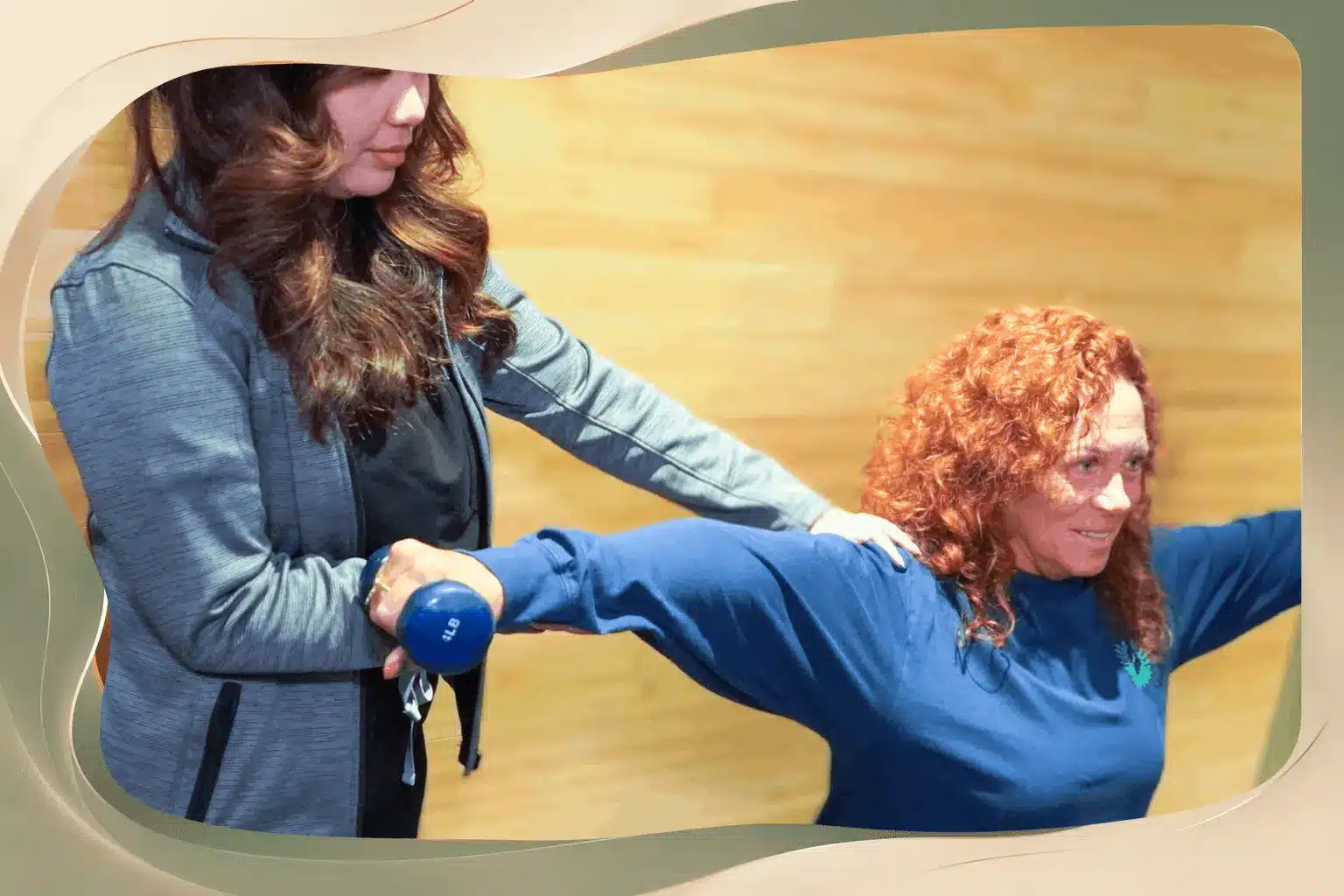
Physical therapy for shoulder pain takes an active approach to healing. Rather than focusing only on temporarily reducing discomfort, physical therapy works to improve mobility, rebuild strength, restore function, and help you use your shoulder confidently again.
At Total Health Physical Medicine & Rehabilitation Center, physical therapy is personalized around something that matters just as much as the diagnosis: what you need your shoulder to do in your everyday life.
Why Is the Shoulder So Easy to Irritate?
The shoulder is wonderfully mobile. Think about everything your arm can do. You can reach overhead, rotate backward, stretch across your body, throw a ball, lift a bag, and perform hundreds of smaller movements without consciously thinking about the mechanics involved.
That freedom comes with a trade-off.
Unlike joints built primarily for stability, the shoulder depends heavily on muscles, tendons, ligaments, and surrounding structures to remain both stable and mobile. When one part of that system becomes injured, weak, irritated, or restricted, normal movement can become uncomfortable.
Shoulder pain may develop after a clear injury, but it can also appear gradually. Repetitive overhead work, sports, lifting, age-related changes, muscle imbalance, and long periods of poor posture can all contribute.
That is why effective treatment begins by asking a more useful question than *”*Where does it hurt?”
The better question is, *”*Why isn’t this shoulder moving comfortably?”
If shoulder discomfort has started interfering with your routine, you can read more about shoulder pain and its treatment options here.
Physical Therapy Is About More Than Exercising Your Shoulder
When patients hear “physical therapy,” many imagine being handed a sheet of exercises and sent home to repeat them.
Good rehabilitation is much more thoughtful than that.
Before beginning physical therapy on the shoulder, a physical therapist can assess factors such as range of motion, strength, joint mechanics, posture, muscle control, and the movements that reproduce symptoms.
Consider two people who both say their shoulder hurts when they lift an arm overhead. One may have weakness affecting shoulder stability. The other may have restricted mobility that changes how the joint moves.
Their symptom sounds similar. Their rehabilitation may look very different.
This individual assessment is what allows physical therapy to address the mechanics contributing to discomfort rather than simply asking everyone with shoulder pain to perform the same routine.
To explore how personalized rehabilitation works at Total Health Physical Medicine & Rehabilitation Center, visit our Physical Therapy page to find out more about our services.
How Physical Therapy Supports Natural Healing
Your body already has repair mechanisms. Rehabilitation is designed to create conditions that allow those processes to work while gradually restoring normal function.
Depending on the condition, physical therapy may use controlled movement, progressive strengthening, mobility work, manual techniques, and education to help the shoulder recover.
The word progressive matters.
Imagine someone who has avoided lifting an arm because it has hurt for several weeks. Asking that person to immediately return to heavy lifting wouldn’t make sense. Rehabilitation gradually introduces an appropriate level of movement and resistance as the shoulder becomes stronger and more capable.
Over time, shoulder pain rehabilitation can help improve how the muscles surrounding the joint work together, restore useful range of motion, and build the strength required for everyday activities.
Healing isn’t always about doing less. Sometimes it is about learning how to move well again.
What About a Shoulder Strain?
Perhaps you remember exactly when your pain started.
You lifted something heavier than expected. Reached suddenly for a falling object. Returned to the gym after several months away. The next morning, your shoulder made its opinion very clear.
A strain can occur when muscles or tendons are overstretched or overloaded. Appropriate physical therapy for shoulder strain may focus initially on protecting the irritated tissue and maintaining comfortable movement before gradually rebuilding strength.
The important part is knowing what you are treating.
Not every painful shoulder is a strain, and trying random exercises before understanding the cause can sometimes aggravate symptoms. A proper evaluation helps establish what movements are appropriate and when they should be introduced.
Why Rest Alone Isn’t Always the Complete Answer
When something hurts, resting it feels logical.
Short-term activity modification may certainly be appropriate after some injuries. The problem arises when protecting the shoulder gradually becomes avoiding the shoulder altogether.
Long periods of reduced movement can contribute to stiffness and weakness. You may then find yourself using the arm less because it feels weak, only for it to become weaker because you’re using it less.
That cycle can be difficult to break.
Physical therapy introduces movement in a controlled way. Instead of asking, “How do we avoid using this shoulder?” rehabilitation asks, “How do we help this shoulder tolerate movement safely again?”
That shift can make recovery feel much less intimidating.
Physical Therapy Exercises for the Shoulder: Why Personalization Matters
Search online for physical therapy exercises for shoulder pain and you will find thousands of videos.
Some may contain perfectly reasonable exercises. That doesn’t necessarily mean those exercises are right for your shoulder.
A person recovering from a rotator cuff injury may require a different progression from someone experiencing stiffness or a shoulder strain. Even the same exercise can be helpful at one stage of recovery and inappropriate at another.
At Total Health Physical Medicine & Rehabilitation Center, exercises can be selected according to your current mobility, strength, symptoms, and goals. As your shoulder improves, the rehabilitation program can progress with you.
The goal is not to collect as many exercises as possible. It is to choose the right movements for the right person at the right time.
When Everyday Activities Become Part of Rehabilitation
Here’s where physical therapy becomes particularly meaningful.
Recovery isn’t measured only by how far your arm moves during an appointment.
Can you reach the top shelf again?
Can you sleep more comfortably?
Can you return to tennis, swimming, gardening, or lifting weights?
Can you work without constantly adjusting your shoulder?
Those are the milestones patients actually care about.
A well-designed rehabilitation plan gradually connects clinical improvements to real-world movement. If your job requires lifting, treatment can prepare you for lifting. If your goal is returning to a sport, rehabilitation can progressively address the movements that sport requires.
That is what turns improved strength into improved quality of life.
Why Choose Total Health Physical Medicine & Rehabilitation Center?
Shoulder pain can look straightforward from the outside, but the person experiencing it knows how many parts of daily life it can interrupt.
At Total Health Physical Medicine & Rehabilitation Center, care begins by understanding those interruptions. We want to know what movements are difficult, what activities you’ve stopped doing, what may have caused the problem, and what you ultimately want to return to.
From there, your treatment plan can be built around your individual needs rather than a generic shoulder protocol. For patients seeking Physical Therapy for Shoulder Pain in New Jersey, this may include hands-on care, targeted rehabilitation, progressive exercise, and other non-surgical treatment options when appropriate.
The aim is not simply to make a shoulder feel better while you are in the clinic. It is to help that shoulder function better when you’re back at home, at work, at the gym, or doing whatever matters to you.
Getting Back to Moving Without Thinking About Your Shoulder
Perhaps the best sign of shoulder recovery is surprisingly ordinary.
You reach for something—and don’t think about it.
You put your shirt on without planning the movement first. You roll onto your side at night without immediately waking up. You lift your arm and trust that it will do what you ask.
Those everyday moments are what rehabilitation is ultimately working toward.
At Total Health Physical Medicine & Rehabilitation Center, physical therapy focuses on helping patients move from protecting a painful shoulder to confidently using it again. By addressing mobility, strength, mechanics, and function together, rehabilitation can support the body’s recovery while helping reduce the likelihood that fear of movement becomes part of the problem.
If shoulder pain is changing how you live your day, it may be worth finding out why. Visit our Physical Therapy page to learn more about how personalized rehabilitation can help you move toward recovery.
Contact Us to discuss your condition or Book an Appointment with Total Health Physical Medicine & Rehabilitation Center.
Frequently Asked Questions
Can physical therapy help shoulder pain naturally?
Physical therapy can help many musculoskeletal causes of shoulder pain by improving mobility, strength, movement mechanics, and function without relying solely on medication or invasive treatment. The appropriate approach depends on what is causing the pain.
How long does physical therapy for shoulder pain take?
There is no universal timeline. Recovery depends on the type and severity of the condition, how long symptoms have been present, your overall health, and your rehabilitation goals. A physical therapist can provide more individualized guidance after an evaluation.
Should I exercise a shoulder that hurts?
That depends on the cause and severity of the pain. Appropriate movement can be an important part of recovery, but pushing through sharp or worsening pain isn’t the goal. A physical therapist can determine which movements are suitable and how they should progress.
Does Total Health Physical Medicine & Rehabilitation Center offer shoulder rehabilitation?
Yes. Total Health Physical Medicine & Rehabilitation Center provides individualized rehabilitation for patients experiencing shoulder pain, limited movement, weakness, and musculoskeletal injuries. Treatment recommendations are based on the patient’s evaluation and recovery goals.
When should I have shoulder pain evaluated?
Consider an evaluation if pain persists, repeatedly returns, interferes with sleep or everyday activities, or is accompanied by significant weakness or loss of movement. Sudden severe pain following an injury, visible deformity, or an inability to move the arm warrants prompt medical attention.
Disclaimer
This article is intended for educational purposes only and does not replace professional medical advice, diagnosis, or treatment. Shoulder pain can have many causes, and physical therapy may not be appropriate for every condition. Consult a qualified healthcare professional for an evaluation and individualized treatment recommendations.


