
Spinal Decompression for Herniated Disc in New Jersey
A herniated disc can change how you move through your day. Sitting becomes uncomfortable, bending feels uncertain, and pain may follow you from your back into your leg. If you are considering spinal decompression for herniated disc in New Jersey, you deserve clear answers about what treatment involves. At Total Health Physical Medicine & Rehabilitation Center, care starts with understanding your symptoms, assessing your needs and exploring suitable options. The goal is to help you move towards everyday activities with greater comfort and confidence.
Herniated Disc Versus Bulging: What Is the Difference?
Your spinal discs sit between the bones of your spine, helping absorb loads during movement. Each has a tough outer layer and a softer centre.
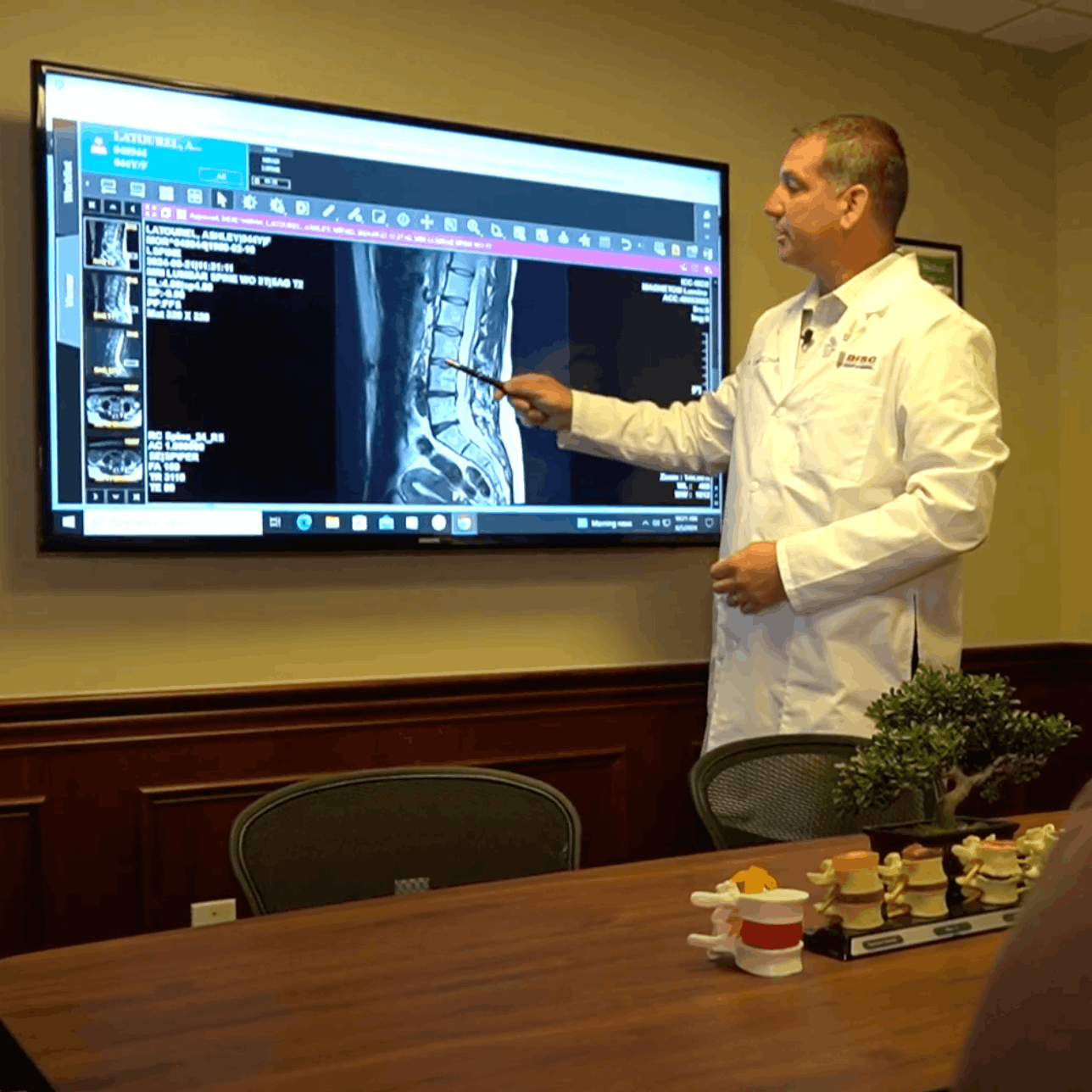
Understanding herniated disc versus bulging disc changes can make your diagnosis less confusing. A bulging disc extends beyond its usual boundary while its outer layer remains intact. A herniated disc occurs when some inner material pushes through a crack or tear in that layer.
Either condition may cause discomfort, although some people have no symptoms. What matters is whether the disc change affects nearby nerves and matches your symptoms. A scan finding needs to be considered alongside your examination rather than treated as the whole explanation.

What Are the Symptoms of a Herniated Disc?
The symptoms of a herniated disc depend on its location and whether a nerve is irritated. A disc problem in the lower back may cause pain around the buttock or symptoms travelling down one leg. A disc problem in the neck can affect the shoulder, arm or hand.
Common signs of a herniated disc include:
- Back or neck pain that affects normal movement.
- Shooting or burning pain into an arm or leg.
- Tingling or numbness along the affected limb.
- Muscle weakness or changes in movement.
- Difficulty finding a comfortable sitting position.
Sciatic pain from a herniated disc can feel more troubling in the leg than in the back. These symptoms deserve assessment because other conditions can produce similar patterns.
How Does Spinal Decompression for Herniated Disc Work?
Non surgical herniated disc decompression uses controlled traction through a specialised treatment table. The equipment applies cycles of pulling and relaxation, aiming to temporarily reduce loading on parts of the spine.
When discussing spinal decompression for herniated disc, it is important to separate the intended mechanism from guaranteed results. Treatment does not literally push a disc back into place, and lasting disc repair cannot be promised.
Evidence supporting traction for back pain and sciatica is limited. NICE guidance advises against routinely offering it for these conditions. A discussion about decompression treatment for herniated disc should therefore cover uncertainties, alternatives and how progress will be assessed. It should also explain when another approach or specialist referral would be more appropriate.
What Happens During a Decompression Session?
At Total Health Physical Medicine & Rehabilitation Center, spinal decompression is available using DRX9000 technology for the lower back and DRX9000C technology for the neck.
A herniated disc decompression machine allows treatment settings to be adjusted to the spinal region and your comfort. You lie on the treatment table while the system delivers controlled cycles. The practice describes sessions as typically lasting 20 to 30 minutes, with progress monitored throughout care.
Tell your provider about any increasing pain, tingling or other discomfort during treatment. Your response matters more than completing a predetermined number of visits. Before starting, discuss your medical history, previous spinal procedures and any conditions that could affect suitability.
What Else Supports Herniated Disc Recovery?
The treatment of a herniated disc often involves several steps. Many people improve without surgery, and recovery may include appropriate activity, physical therapy and medication when recommended by a qualified clinician.
For patients in New Jersey, a practical plan should connect treatment with daily life. That could mean gradually tolerating a commute, returning to exercise or lifting more comfortably.
Support may include:
- Exercises matched to your current abilities.
- Gradual progression of walking and everyday activity.
- Guidance on lifting and managing demanding tasks.
- Regular reviews of pain, strength and function.
- A manageable home exercise routine.
Searching for a cure for herniated disc pain is understandable, but no treatment guarantees a cure. Herniated disc recovery time varies, so improvement should be judged through meaningful changes rather than a fixed deadline.
Seek emergency care for new bladder or bowel problems or numbness around the groin. Significant or worsening weakness requires urgent assessment.

Start With Clear Answers and Personalised Care
A diagnosis can feel overwhelming, but your next step can be straightforward. An assessment can help you understand your symptoms, ask questions and make an informed decision about care.
Contact Total Health Physical Medicine & Rehabilitation Center to explore herniated disc care in New Jersey. Book an appointment at our Florham Park or Berkeley Heights, NJ, locations to discuss treatment options and a recovery plan built around your needs.

Real People. Real Results
More than 250 five-star reviews on Google
I’ve now gotten to the “home stretch” of my 30-session disc decompression treatment for low back pain and a most odd “internal itch” in my legs and feet. To date, every visit has gotten better. The staff at Total Health FP is genuinely interested in eliminating my issues. The treatments are straightforward and specifically designed to bring me back to wellness. An added plus is their wonderful good nature and ability to create a fun and productive atmosphere.


Got a question?
Frequently Asked Questions
Can spinal decompression help a herniated disc heal naturally?
Spinal decompression uses controlled traction to temporarily reduce pressure on parts of the spine. However, it has not been proven to repair a herniated disc or accelerate natural healing. Many herniated discs improve over time with appropriate conservative care.
Is spinal decompression better than surgery for a herniated disc?
Not necessarily. Non-surgical spinal decompression and surgery serve different purposes. Many patients can manage herniated disc symptoms without surgery, but severe nerve compression or progressive weakness may require specialist evaluation. The right approach depends on your symptoms, examination findings and overall health.
Can a herniated disc come back after spinal decompression treatment?
Yes. Symptoms can return even after a period of improvement. Spinal decompression cannot guarantee that a herniated disc will heal permanently or prevent future episodes. Maintaining strength, staying active and following an appropriate rehabilitation plan may help support long-term spinal health.
Can spinal decompression treat herniated discs in both the neck and lower back?
Spinal decompression equipment can be designed for either the cervical spine (neck) or lumbar spine (lower back). At Total Health Physical Medicine & Rehabilitation Center in New Jersey, DRX9000 and DRX9000C systems are available for these areas. Treatment suitability depends on an individual assessment.
Where can I get non-surgical herniated disc treatment in New Jersey?
Total Health Physical Medicine & Rehabilitation Center offers herniated disc care at its Florham Park and Berkeley Heights, NJ, locations. Patients can schedule an assessment to discuss their symptoms, explore non-surgical treatment options and determine whether spinal decompression may be appropriate.