
Spinal Decompression for Sciatica in New Jersey
Sciatica has a way of interrupting the moments you usually take for granted. A drive to work, a walk with your family or getting comfortable at night can become a challenge. If you are exploring spinal decompression for sciatica in New Jersey, understanding your options can help you feel more confident about your next step. At Total Health Physical Medicine & Rehabilitation Center, care begins with listening to your experience, assessing your symptoms and discussing a plan that fits your needs and everyday life.
Why Does Sciatica Pain Travel Down Your Leg?
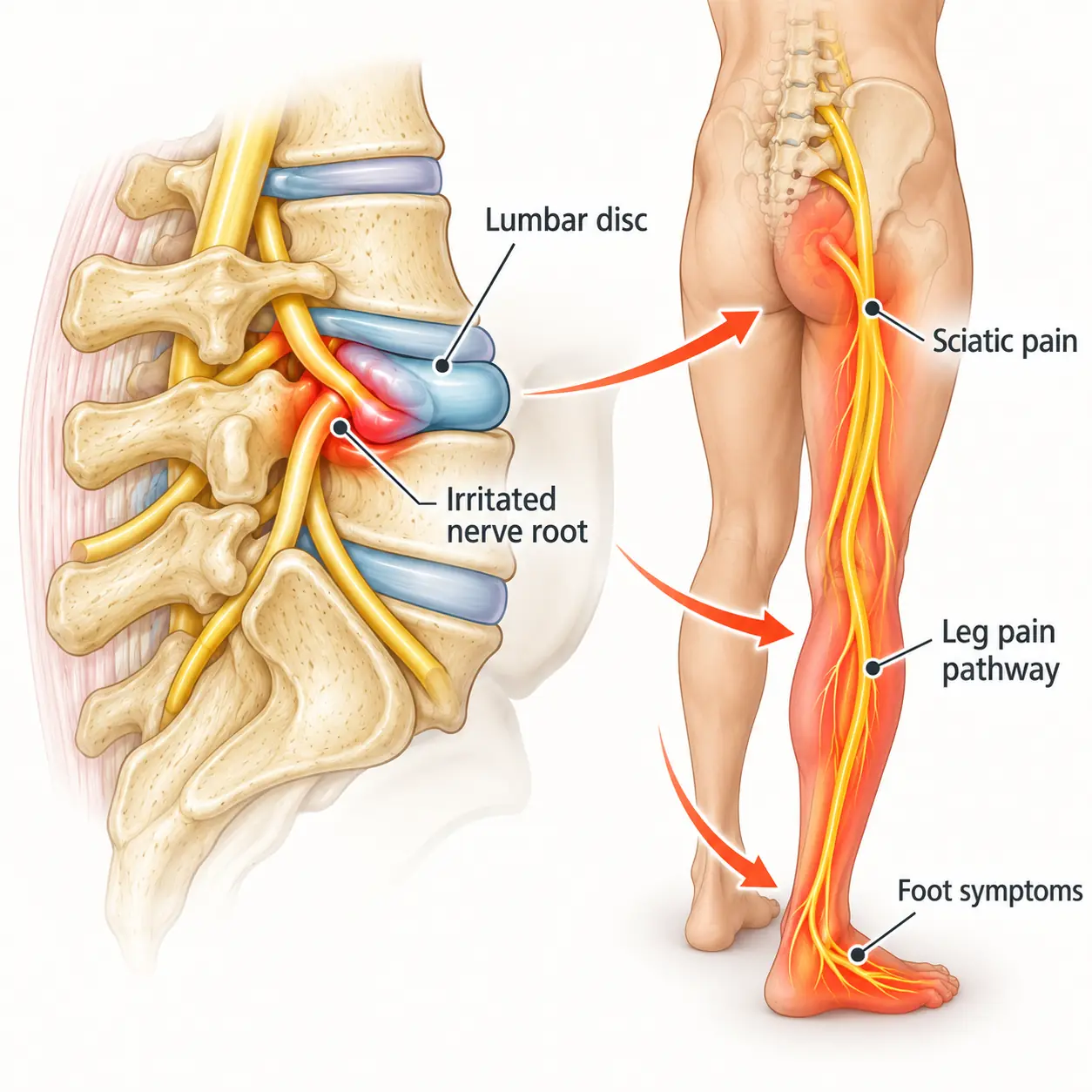
It can feel confusing when the most noticeable pain is in your leg, yet the problem may begin in your lower back. The sciatic nerve is formed from nerve roots near the base of your spine and travels through the buttock into the leg.
Sciatica describes symptoms associated with irritation or compression along this nerve pathway, commonly involving a nerve root in the lower back. A herniated disc is one possible cause. Narrowing around the nerves, known as spinal stenosis, can also contribute.
Understanding where irritation may be occurring helps guide care. The location of pain alone cannot confirm its cause, which is why an assessment matters before choosing treatment.

What Can Sciatica Feel Like?
For some people, sciatica feels like an occasional sharp pull. For others, it brings burning discomfort or tingling that makes sitting and walking difficult. Symptoms usually affect one side, although their intensity and distribution can vary.
You may notice:
- Pain travelling from the buttock down the leg.
- Burning or shooting nerve pain in lower leg areas.
- Tingling or numbness reaching the foot or toes.
- Weakness that affects normal movement.
- Symptoms that worsen with certain movements, coughing or sneezing.
Your back may hurt less than your leg, or you may have little back pain at all. These experiences can feel unsettling, but they provide useful assessment clues. Tell your provider what changes your symptoms and which activities have become harder.
How Does Spinal Decompression for Sciatica Work?
Non surgical sciatica decompression therapy uses a specialised table to apply controlled traction to the spine. This involves cycles of pulling and relaxation, intended to temporarily reduce loading on spinal structures.
When considering spinal decompression for sciatica, it is important to understand both the treatment’s aims and its limitations. It does not directly stretch the sciatic nerve or guarantee that a herniated disc will heal.
Evidence for lasting benefits from traction is limited, and NICE guidance advises against routinely offering it for lower back pain with or without sciatica. A discussion about decompression therapy for sciatica should include alternatives, realistic expectations and clear measures of progress.
You deserve explanations you can understand, time to ask questions and a plan that changes when your response suggests it should.

What Happens During Your Appointment?
At Total Health Physical Medicine & Rehabilitation Center, assessment helps determine whether decompression for sciatica is appropriate to discuss. Your symptoms, medical history and examination findings help inform that decision.
The practice uses the DRX9000 system for lumbar spinal decompression. During treatment, you lie on a specialised table while the equipment applies controlled cycles. Settings are adjusted to your condition and comfort, and sessions typically last 20 to 30 minutes.
Let your provider know if discomfort increases or symptoms spread during a session. Progress should be measured through everyday improvements, such as walking more comfortably, sleeping better or tolerating sitting. If treatment is not helping, your plan needs reassessment.
What Else Can Help You Move Forward?
Recovery should support the life you want to return to. For someone in New Jersey, that might mean managing a commute. For someone else, it could mean gardening or enjoying a family outing.
Depending on your assessment, care may include:
- Physical therapy and exercises suited to your abilities.
- Gradual activity changes that build movement tolerance.
- Advice on pacing tasks during a flare up.
- Appropriate pain management discussed with your clinician.
Many cases of sciatica improve over time. Staying active within your tolerance is generally encouraged, rather than spending prolonged periods in bed.
Nerve pain in leg after back surgery needs careful review before further treatment. Previous surgery does not automatically make decompression suitable. Also, surgical decompression of sciatic nerve roots differs from table based therapy.
Seek emergency care for new bladder or bowel problems or numbness around the groin. Severe or worsening weakness in both legs is another emergency warning sign.

Let Us Help You Understand Your Next Step
You do not need every answer before reaching out. Start with a conversation about your symptoms and what you hope to regain.
Contact Total Health Physical Medicine & Rehabilitation Center to explore sciatica care in New Jersey. Book an assessment at our Florham Park or Berkeley Heights, NJ, locations and discuss a personalised path towards more comfortable movement.

Real People. Real Results
More than 250 five-star reviews on Google
I’ve now gotten to the “home stretch” of my 30-session disc decompression treatment for low back pain and a most odd “internal itch” in my legs and feet. To date, every visit has gotten better. The staff at Total Health FP is genuinely interested in eliminating my issues. The treatments are straightforward and specifically designed to bring me back to wellness. An added plus is their wonderful good nature and ability to create a fun and productive atmosphere.


Got a question?
FAQs – Spinal Decompression for Sciatica in New Jersey
Can spinal decompression provide long-term relief from sciatica?
Spinal decompression may provide temporary symptom relief for some patients, but lasting results are not guaranteed. Research on its long-term effectiveness for sciatica remains limited. Your response depends on the underlying cause, severity of symptoms and overall treatment plan.
How many spinal decompression sessions are needed for sciatica?
There is no fixed number of sessions that works for everyone. Your provider will consider your symptoms, medical history and response to treatment before recommending a plan. Regular progress reviews help determine whether continuing decompression therapy is appropriate.
Is spinal decompression safe for everyone with sciatica?
No. Spinal decompression may not be suitable for people with certain spinal fractures, severe osteoporosis, spinal instability or other medical conditions. A thorough assessment is essential to determine whether the treatment is appropriate and safe for your individual condition.
Can spinal decompression help sciatica caused by spinal stenosis?
Spinal decompression may be discussed for certain patients with spinal stenosis, but evidence supporting traction for this condition is limited. Treatment suitability depends on the severity of nerve compression, symptoms and examination findings. Other approaches, including physical therapy, may be more appropriate.
Where can I get non-surgical sciatica treatment in New Jersey?
Total Health Physical Medicine & Rehabilitation Center offers sciatica care at its Florham Park and Berkeley Heights, NJ, locations. Patients can schedule an assessment to explore non-surgical treatment options, including whether spinal decompression is suitable for their symptoms.