
Spinal Decompression Table Treatment in New Jersey
When back pain keeps returning, it is natural to wonder what another treatment might feel like and whether it could help. A spinal decompression table may look unfamiliar, but understanding the equipment can make the experience less daunting. At Total Health Physical Medicine & Rehabilitation Center in New Jersey, care begins with a conversation about your symptoms, your health and the activities you want to enjoy again. Before any treatment starts, you should understand what is being recommended, why it may be considered and what results are realistic.
What Is a Decompression Table?
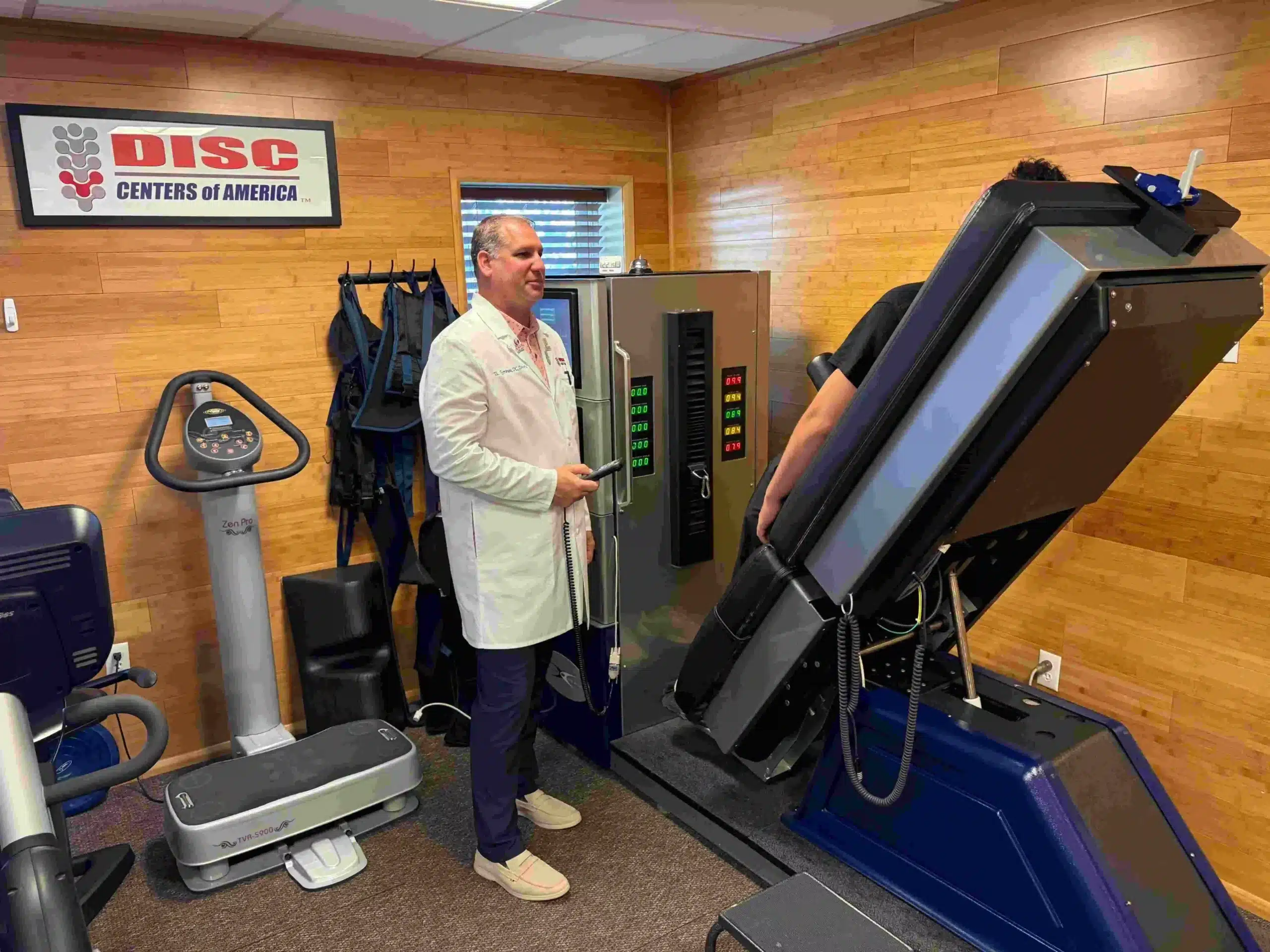
A decompression table is specialised equipment used to apply controlled traction to the spine. Traction means a pulling force, delivered through settings that can be adjusted by your provider.
During treatment, the equipment alternates between periods of pulling and relaxation. The intention is to temporarily reduce loading on certain spinal structures. This approach is sometimes described as decompression of the spine, although it does not permanently lengthen your spine or guarantee that damaged discs will repair.
A back decompression table is different from an ordinary treatment couch. It includes a system that controls the force applied during the session. This table based treatment also differs from surgical decompression, which involves an operation to relieve pressure on nerves.

Why Might a Provider Discuss Disc Decompression?
The discs between your spinal bones help absorb loads as you move. When a disc herniates, some of its inner material pushes through its outer layer. Depending on its location, it may irritate a nearby nerve and contribute to pain, tingling or weakness.
Disc decompression may be discussed for selected patients with symptoms thought to involve spinal discs. However, back pain has many possible causes, and similar symptoms do not always need the same treatment.
An assessment may explore:
- Where your pain starts and whether it travels.
- Which movements ease or aggravate your symptoms.
- Whether you have numbness, tingling or weakness.
- Your previous treatment and any spinal surgery.
- How discomfort affects work, sleep and everyday activity.
These details help establish whether spinal disc decompression treatment is appropriate to consider or whether another approach deserves priority.
What Does a Spinal Decompression Table Session Feel Like?
It is understandable to feel nervous about unfamiliar equipment. Knowing what happens can help you arrive with clearer expectations and questions.
During a spinal decompression table session, you lie on the table while your provider positions you and adjusts the equipment. At Total Health Physical Medicine & Rehabilitation Center, the DRX9000 system is used for lumbar treatment, while the DRX9000C system is used for the neck. The practice describes sessions as typically lasting 20 to 30 minutes.
The back decompression machine delivers controlled cycles rather than a continuous, forceful pull. Your comfort and response should guide adjustments.
You should tell your provider immediately if you experience increasing pain, spreading tingling or other discomfort. Treatment should never become something you feel obliged to tolerate. Ask how your response will be monitored and what would prompt a change in your plan.

Can a Chiropractic Decompression Table Help Back Pain?
A chiropractic decompression table is a treatment tool, and its suitability depends on the person using it. Access to advanced equipment does not, by itself, establish that treatment will help your particular condition.
Evidence for lasting benefits from spinal traction is limited. NICE guidance advises against routinely offering traction for lower back pain with or without sciatica. Decompression treatment should therefore be discussed with realistic expectations, including its limitations and available alternatives.
No machine can promise to put a disc back into place, cure every cause of back pain or eliminate the need for surgery. A useful plan includes clear goals and regular reviews. Better walking tolerance or more comfortable sitting can be meaningful signs of progress.
What Should You Look for Beyond the Equipment?
If you are searching for a “decompression table near me” in New Jersey, look for a provider who takes time to understand your situation and explain your options.
Your assessment should come before a commitment to treatment. Discuss your medical history, existing conditions and previous procedures, and ask whether these affect suitability.
At Total Health Physical Medicine & Rehabilitation Center, decompression may be combined with other services, including physical therapy and chiropractic care. A personalised plan should also help you build confidence in everyday movement, with practical guidance you can use between appointments.

Take the First Step Towards Clearer Answers
You do not have to understand every treatment before asking for help. Start with what matters to you: the movements you miss and the questions you need answered.
Contact Total Health Physical Medicine & Rehabilitation Center to explore your back care options in New Jersey. Book an assessment at our Florham Park or Berkeley Heights, NJ, locations and discuss a plan built around your needs.

Real People. Real Results
More than 250 five-star reviews on Google
I’ve now gotten to the “home stretch” of my 30-session disc decompression treatment for low back pain and a most odd “internal itch” in my legs and feet. To date, every visit has gotten better. The staff at Total Health FP is genuinely interested in eliminating my issues. The treatments are straightforward and specifically designed to bring me back to wellness. An added plus is their wonderful good nature and ability to create a fun and productive atmosphere.


Got a question?
Frequently Asked Questions
Is a spinal decompression table the same as an inversion table?
No. A spinal decompression table uses computer-controlled traction to apply adjustable pulling forces to the spine. An inversion table uses body positioning and gravity to create traction. Both approaches have limitations, and neither is suitable for everyone.
Do you need an MRI before using a spinal decompression table?
Not everyone needs an MRI before spinal decompression treatment. Your provider will review your symptoms, medical history and examination findings to determine whether imaging is necessary. An MRI may be recommended when there are concerning neurological symptoms or other findings that require further investigation.
Can a spinal decompression table treat both neck and lower back pain?
Spinal decompression tables can be designed for different spinal regions. At Total Health Physical Medicine & Rehabilitation Center, the DRX9000 system is used for lumbar decompression, while the DRX9000C is used for cervical decompression. Treatment suitability depends on your condition and clinical assessment.
Are there any side effects of spinal decompression table treatment?
Some patients may experience temporary soreness, muscle discomfort or increased symptoms following traction. Although treatment is non-surgical, it is not risk-free. Report worsening pain, numbness, tingling or weakness promptly so your provider can reassess your care.
Where can I find spinal decompression table treatment in New Jersey?
Total Health Physical Medicine & Rehabilitation Center offers spinal decompression table treatment at its Florham Park and Berkeley Heights, NJ, locations. Patients can schedule an assessment to discuss their symptoms, learn about the equipment and determine whether decompression is an appropriate option.